The Influencer vs. The Restaurant Chain: How a Single Tweet Sparked a Nationwide Debate on Pre-Made Meals in China
/ / views / Reading time 26 min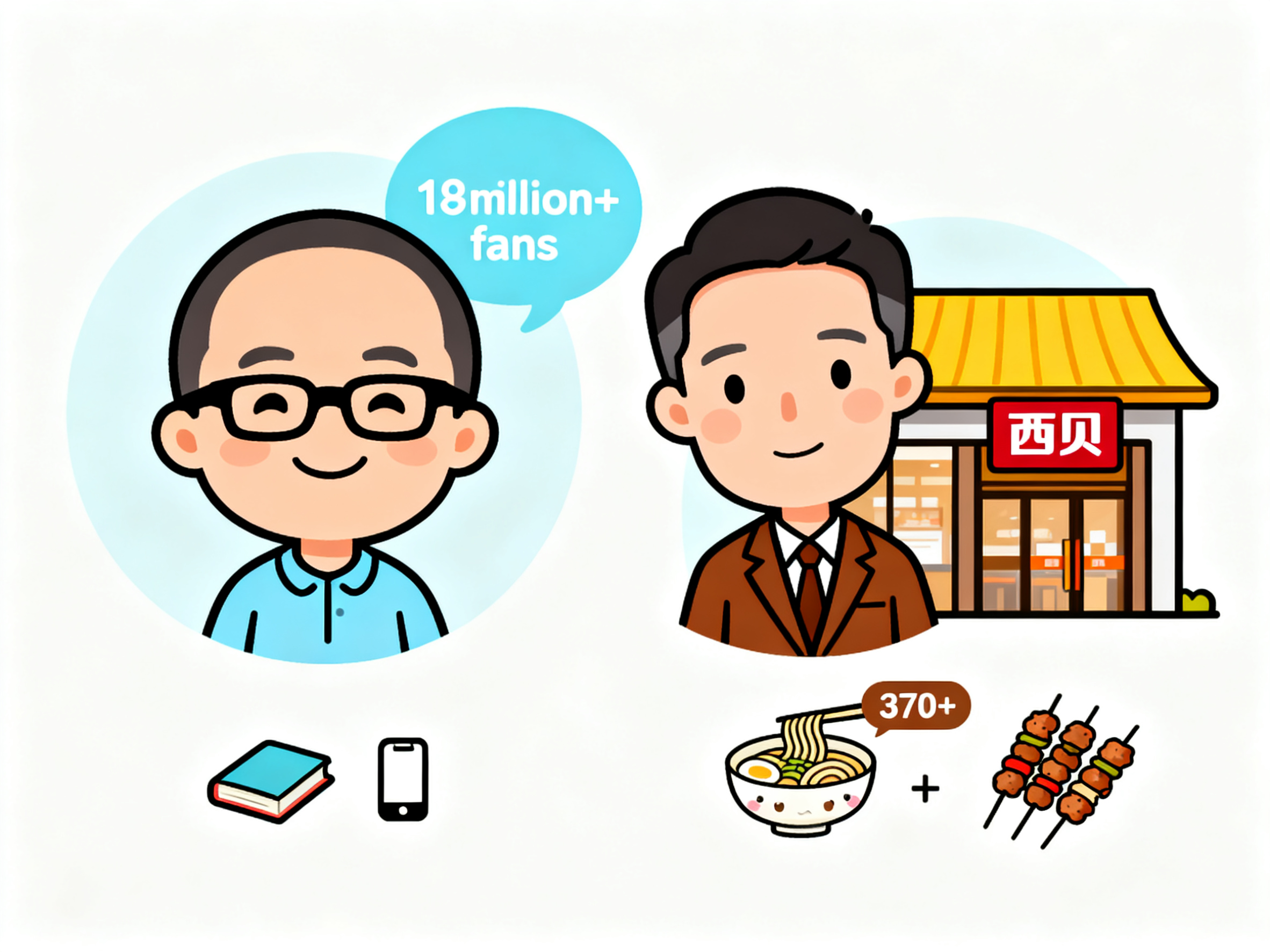
The heated debate between tech influencer Luo Yonghao and restaurant chain Xibei over pre-made meals has sparked nationwide discussions about food transparency in China.
In a clash that highlights the growing tension between information transparency and brand trust, a single social media complaint has ignited a firestorm in China’s dining industry, quietly reshaping the future of the country’s “ready-to-cook” meal market.
1. The Main Players: Understanding the Heavyweights
To grasp the full impact of this controversy, it’s essential to understand the significance of “Luo Yonghao” and “Xibei” in China. These are not just an ordinary person and a restaurant.
Luo Yonghao: The Outspoken Voice of China’s Tech Scene
Luo Yonghao is a highly influential and controversial figure in China’s internet and entrepreneurial circles. He first gained fame as a charismatic English teacher known for his witty and sharp-tongued style. He later founded Smartisan, a smartphone company that, while not a commercial success, cemented his reputation as a persistent and idealistic entrepreneur. Today, with over 18 million followers on social media, he is a top influencer—akin to a major Western tech blogger—whose opinions on consumer rights can spark national conversations and even influence corporate decisions.
Xibei莜面村 (Xībèi Yóumiàn Cūn): A Titan of Northern Chinese Cuisine
Xibei莜面村 (often shortened to Xibei) is a popular restaurant chain specializing in the cuisine of Inner Mongolia, a northern region of China bordering Mongolia. This region is known for its hearty, nomadic-inspired dishes, featuring lamb and distinctive oat-based noodles—a stark contrast to the rice-centric cuisine of Southern China.
Founder Jia Guolong successfully brought the traditional, rustic flavors of his hometown to major cities across China. With over 370 locations, Xibei’s scale is comparable to Panda Express in the U.S., but its brand is built on “authentic, homemade Northern flavors.” Signature dishes like youmian (chewy oat noodles with a texture similar to al dente pasta), lamb skewers, and pilaf have made it a favorite among middle-class families who trust its image of being “fresh, handmade, and authentic.”
2. The Explosion: A Tweet That Shook the Industry
On the evening of September 10th, Luo Yonghao posted on Weibo (China’s equivalent of X/Twitter and a central platform for public discourse): “Almost everything I ate at Xibei was a frozen, ready-to-heat dish. It felt disgusting.” To prove his point, he publicly offered a 100,000 RMB (approx. $14,000 USD) reward for evidence of Xibei’s use of pre-prepared meals.
The statement was a bombshell. For a brand that markets itself as “freshly made” and “authentic,” the accusation was devastating. Backed by Luo’s massive influence, the post went viral, igniting a discussion among millions of netizens within hours.
3. The Standoff: A Fierce Online and Offline Clash
The reaction from both sides was swift, and the conflict escalated rapidly.
Xibei’s Forceful Denial:
That same night, Xibei’s founder, Jia Guolong, publicly responded, stating that Xibei restaurants “do not use pre-cooked meals” and announced plans to sue Luo Yonghao for damaging the brand’s reputation.Luo’s Unwavering Defiance:
Luo immediately fired back, welcoming the lawsuit and vowing to personally deliver the 100,000 RMB reward money to Xibei’s headquarters to prove he wasn’t just making a casual complaint.The Immediate Financial Hit:
The public outcry had an instant impact on Xibei’s bottom line. In just three days (September 10-12), the chain’s daily revenue across the country dropped by millions of RMB, with a noticeable decline in foot traffic. This demonstrated just how sensitive Chinese consumers are to the perception of being served pre-made food without their knowledge.
4. An Exclusive Look: Media Uncovers the Truth in Xibei’s Kitchens
To verify the claims, state-level media and industry journalists were invited to tour Xibei’s kitchens. Their findings painted a complicated picture.
On one hand, reporters did find that some ingredients, like marinated meats and pre-processed vegetables, were stored in refrigerated or frozen states. On the other hand, Xibei presented its “Standard Operating Procedures” for 13 key dishes, emphasizing that all ingredients met China’s national food safety standards and underwent “secondary processing” (like stir-frying or heating) in-store. They were not simply “heat-and-serve” meals.
This tour didn’t end the debate. Instead, it focused public attention on a more critical question: Had Xibei ever clearly informed its customers that some ingredients were pre-prepared? The restaurant’s PR team was now facing a massive challenge: how to balance the need for standardized efficiency with the consumer’s right to know.
5. Social Media Erupts: A Nation Divided
As the story gained momentum, Chinese social media split into two fiercely opposed camps.
Team Luo: “Consumers Have a Right to the Truth”
This group argued that paying customers deserve to know how their food is sourced and prepared. They felt that by advertising “freshly made” while using pre-prepared components, Xibei was deceiving its patrons. Luo, in their eyes, was a whistleblower fighting for consumer transparency.Team Xibei: “Pre-Prepared Food Isn’t Evil”
This side contended that using ready-to-cook ingredients is a common and necessary practice in modern chain restaurants. It ensures consistency, speeds up service, and modern freezing technology preserves nutrients and safety. They argued that Xibei was being unfairly targeted for standard industry practices.
Amid the firestorm, Xibei’s frontline chefs and servers became collateral damage, facing online harassment and abusive calls from angry netizens. On September 14th, Luo Yonghao posted again, urging the public: “Please stop harassing Xibei’s frontline employees. They are victims in this too.” His statement helped cool some of the public anger.
6. A Turning Point: National Standards for Pre-Made Meals
The controversy’s impact extended far beyond Luo and Xibei, accelerating regulatory change across China’s entire pre-prepared food industry.
China’s National Health Commission (the equivalent of the U.S. Food and Drug Administration) fast-tracked a draft of the “National Food Safety Standard for Pre-prepared Dishes.” In China, a “National Standard” is not a guideline; it is a mandatory regulation that all businesses must legally follow.
The draft laid out two core requirements:
- Restaurants and food service venues must clearly label which menu items use pre-prepared ingredients.
- Producers of pre-prepared meals must clearly list all ingredients, expiration dates, and storage conditions on their packaging.
Xinhua News Agency, China’s official state media, commented:
“Pre-prepared food is here to stay, but hiding its use is the real problem.”
This signaled a major shift: in the near future, Chinese consumers will have the legal right to know exactly what they are eating.
7. The Aftermath: A Ceasefire and Lessons Learned
On the evening of September 13th, Luo Yonghao announced on Weibo, “The Xibei incident is over for now. I have to get back to my real work,” effectively ending his public campaign. While Xibei did not issue a formal “ceasefire” statement, it held emergency internal meetings to optimize its supply chain and develop a better communication strategy regarding its use of pre-prepared ingredients.
This high-profile dispute offers three key lessons for anyone watching the Chinese market:
- The Awakening of Consumer Rights: Chinese consumers are no longer just focused on taste and price. They demand transparency and want to “eat with understanding.” For brands, transparency is the new currency of trust.
- The Evolution of Corporate PR: In a crisis, aggressive denials or silence are no longer effective strategies. Swift, transparent responses—like opening up kitchens and explaining processes—are crucial to rebuilding trust.
- Regulation Follows Outrage: The controversy over pre-prepared meals stemmed from a lack of clear standards. The new national standard will force the industry to operate with greater accountability, moving it from a “gray area” to a regulated system.
From a social media storm to the acceleration of national policy, the battle between Luo Yonghao and Xibei reflects a deep-seated “trust game” between consumers and corporations in China. More importantly, it signals that the country’s massive dining industry is on a path toward a more transparent and regulated future.
Ultimately, no matter where you are in the world, the conversation around food always comes back to three core values: safety, knowledge, and trust. And that is the universal lesson this Chinese controversy offers to consumers and restaurateurs everywhere.